
Energy Audit for Textile Mills
Spinning and weaving units run on electricity, while dyeing, printing and finishing depend on steam, hot water and thermic fluid. Enerzivo covers both sides of a textile mill in one audit.
Start a free textile auditHow a textile plant uses energy
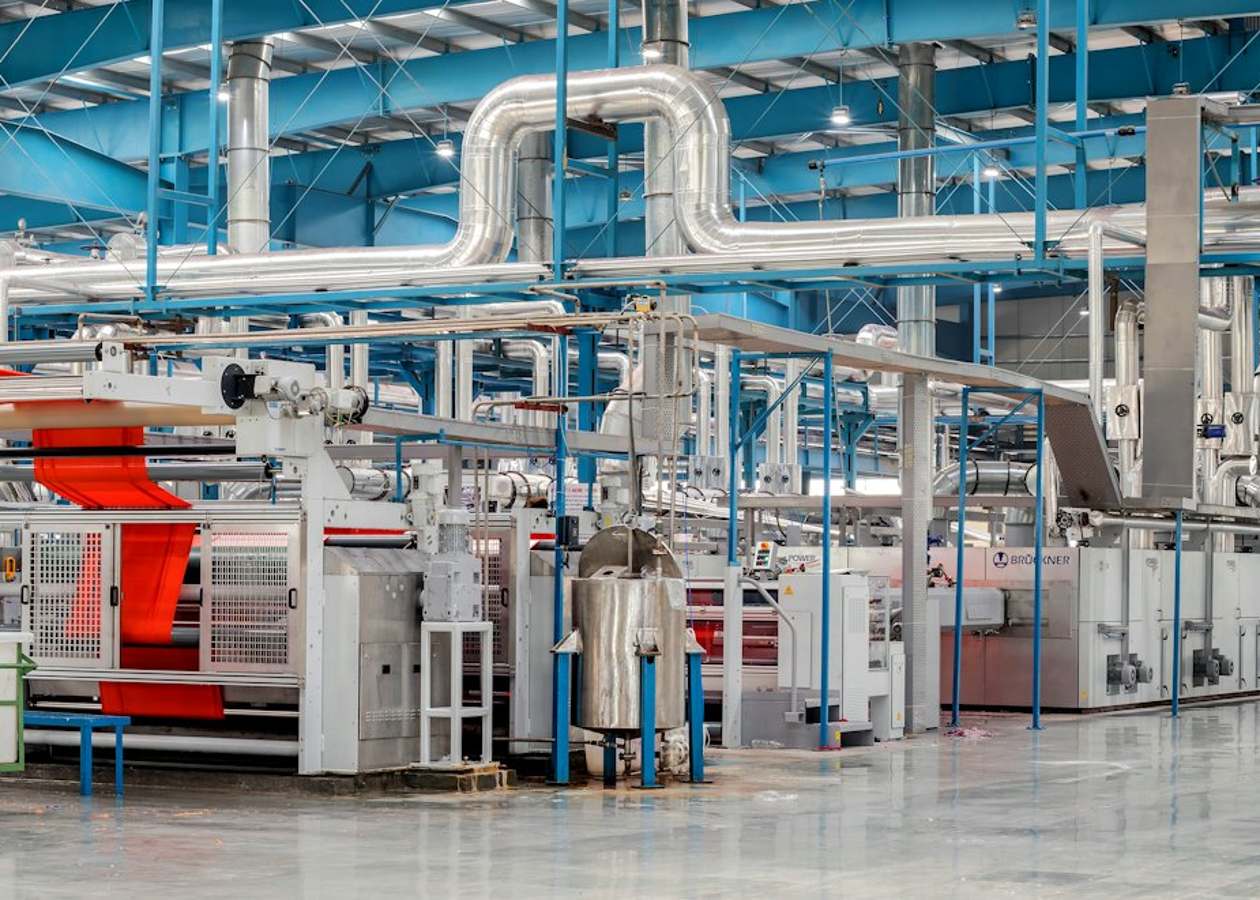
The textile value chain covers spinning, weaving or knitting, wet processing (dyeing, printing and finishing) and garmenting. Spinning and weaving mainly use electricity. Wet processing uses large amounts of steam, hot water and thermic fluid heat.
- Spinning: electricity is the dominant energy cost (humidification, ring frames, compressed air)
- Wet processing: steam and thermic fluid make up 60-70 % of the energy used
- Major levers: condensate and heat recovery from dye-bath effluent, efficient humidification plants, VFDs, and compressed air leak control
Top energy saving opportunities
Compressed air leak control and pressure optimisation
Air-jet weaving and pneumatic conveying make compressed air one of the largest power users; leaks of 20-30 % are common in older units.
Condensate recovery and steam trap maintenance
Returning hot condensate from jet dyeing machines and stenters cuts boiler fuel and water treatment cost.
Heat recovery from hot dye-bath effluent
Plate heat exchangers can pre-heat fresh process water using the heat in drained hot effluent.
VFDs on humidification and ID/FD fans
Fans running at constant speed with dampers waste power when weather and load change through the day.
Thermic fluid heater and stenter efficiency
Excess air control, insulation of hot oil lines, and exhaust heat recovery on stenters.
Actual savings depend on the plant. Enerzivo calculates savings, investment and payback from your measured data.
What to audit
- Ring frames, autoconers and looms (electricity)
- Humidification plants and supply/return air fans
- Compressed air for air-jet looms and pneumatic systems
- Coal, briquette or wood-fired boilers and thermic fluid heaters
- Jet dyeing machines, stenters and hot-water systems
The textile sector in India
| Economic share | About 2.3 % of GDP and about 13 % of industrial production Source: Ministry of Textiles, 2023-24 |
|---|---|
| Exports | About 8-9 % of India's total merchandise exports Source: Ministry of Textiles, 2023-24 |
| Employment | About 45 million people employed directly Source: Ministry of Textiles |
| World position | One of the largest producers of cotton and the 6th largest exporter of textiles and apparel Source: Ministry of Textiles / WTO |
Textile energy audit FAQs
What does a textile energy audit cover?
+
A detailed audit covers the electrical system (transformers, motors, humidification, compressed air, lighting) and the thermal system (boilers, thermic fluid heaters, steam and condensate network, dyeing and finishing machines), with measured data, KPIs and costed energy conservation measures.
How much energy can a textile mill save?
+
Savings depend on the age and operation of the plant. Measures such as leak control, condensate recovery, VFDs and heat recovery often deliver savings with simple paybacks of under two years. Enerzivo calculates the savings for your measured data.
Can Enerzivo calculate UKG and steam consumption per kg?
+
Yes. Enter monthly production and energy data and Enerzivo works out specific energy consumption, trends and benchmark gaps for the plant.
Audit your textile plant with Enerzivo
Free Trial with all 25 modules, AI recommendations and a sample BEE-style PDF report. No card needed.